



How can the center of gravity design of children's scooters improve handling safety during turns?
Release Time : 2026-04-20
Turning is the most challenging aspect of using a children's scooter, testing stability and handling safety. An improperly designed center of gravity can easily lead to tipping over and loss of control, posing a greater risk, especially to children whose balance is not yet fully developed.
1. Lowering the Center of Gravity to Improve Rollover Resistance
The height of the center of gravity directly affects the stability of the vehicle when turning. By designing the pedals closer to the ground and rationally positioning key components, the overall center of gravity can be effectively lowered. A lower center of gravity reduces the impact of centrifugal force during turns on the vehicle's rollover, thus reducing the risk of tipping over and improving riding safety.
2. Optimizing Forward and Rear Weight Distribution to Enhance Handling Balance
Besides height, the distribution of the center of gravity in the forward and backward direction is equally important. By rationally configuring the handlebars, front wheel assembly, and pedal positions, the center of gravity can be slightly shifted towards the center area, avoiding instability caused by leaning forward or backward. A balanced center of gravity distribution helps children control the direction more easily when turning, reducing the difficulty of operation.
3. Wider Footboard Design for Stable Standing Posture
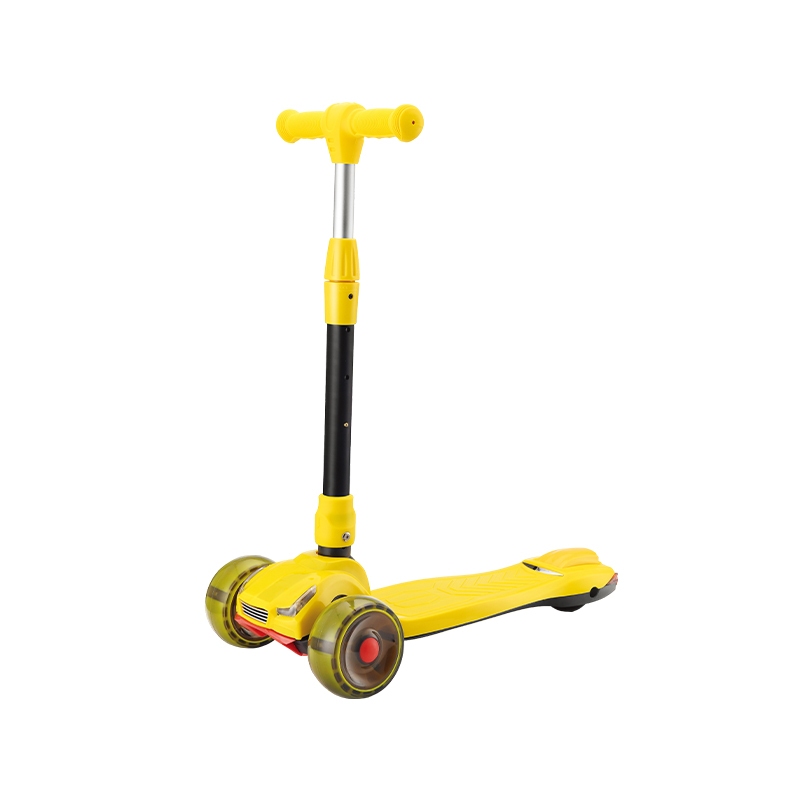
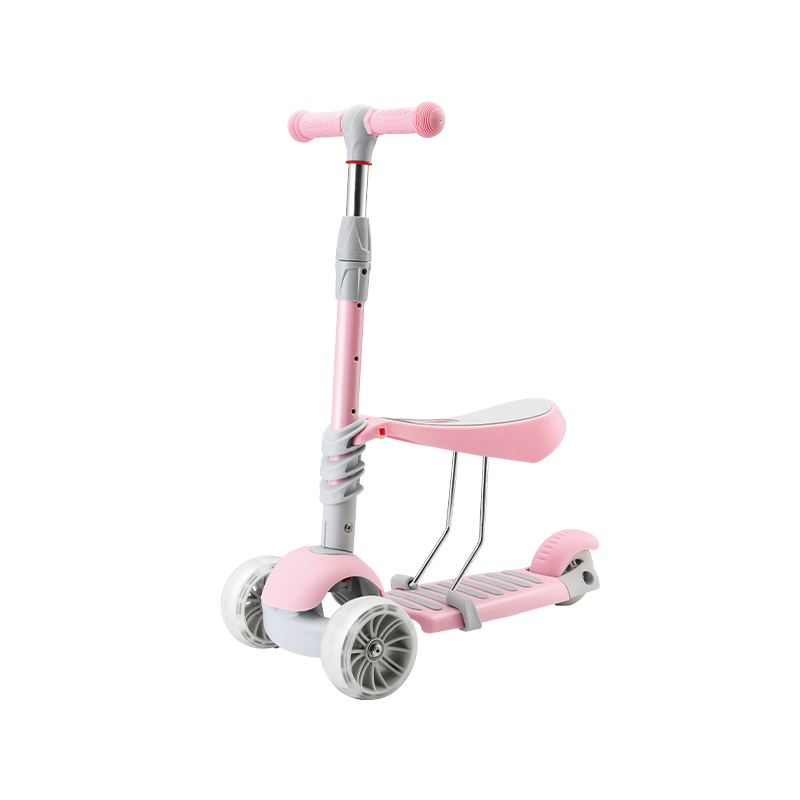
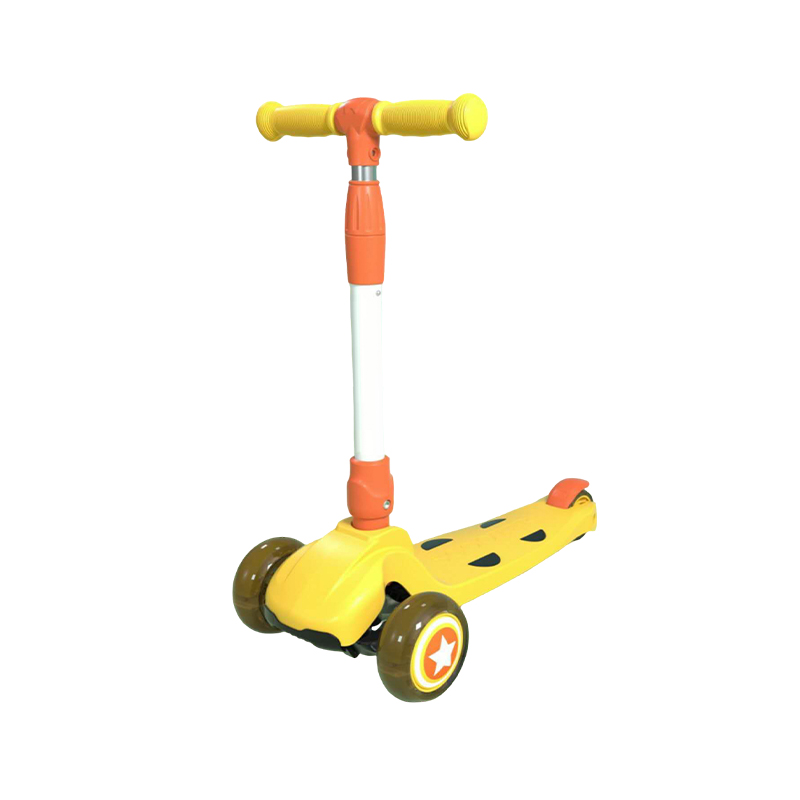
Footboard width is closely related to center of gravity control. A wider footboard provides a larger support area for the feet, making it easier for children to adjust their center of gravity when turning. A stable standing posture helps the body and the scooter coordinate well, thus improving overall handling and safety.
4. Shifting Steering Structure Guides Natural Center of Gravity Shift
Some scooters use a shifting steering design, which achieves steering by shifting the body's center of gravity. This structure guides children to naturally shift their center of gravity inward when turning, aligning it with the direction of the scooter's turn. This improves turning agility and stability, reducing the possibility of sudden loss of balance.
5. Wheel Spacing and Chassis Structure Work Together to Stabilize the Center of Gravity
Wheel layout also affects center of gravity performance. Appropriately increasing the distance between the front or rear wheels expands the support range, making the scooter more stable when turning. Combined with a well-designed chassis structure, this further enhances overall anti-tipping ability, allowing the scooter to remain stable at different speeds and angles.
In conclusion, the children's scooter effectively improves handling safety during turns through various measures, including lowering the center of gravity, optimizing weight distribution, increasing support area, and combining structural design. This center-of-gravity design not only enhances riding stability but also provides children with a safer and easier-to-control user experience.
1. Lowering the Center of Gravity to Improve Rollover Resistance
The height of the center of gravity directly affects the stability of the vehicle when turning. By designing the pedals closer to the ground and rationally positioning key components, the overall center of gravity can be effectively lowered. A lower center of gravity reduces the impact of centrifugal force during turns on the vehicle's rollover, thus reducing the risk of tipping over and improving riding safety.
2. Optimizing Forward and Rear Weight Distribution to Enhance Handling Balance
Besides height, the distribution of the center of gravity in the forward and backward direction is equally important. By rationally configuring the handlebars, front wheel assembly, and pedal positions, the center of gravity can be slightly shifted towards the center area, avoiding instability caused by leaning forward or backward. A balanced center of gravity distribution helps children control the direction more easily when turning, reducing the difficulty of operation.
3. Wider Footboard Design for Stable Standing Posture
Footboard width is closely related to center of gravity control. A wider footboard provides a larger support area for the feet, making it easier for children to adjust their center of gravity when turning. A stable standing posture helps the body and the scooter coordinate well, thus improving overall handling and safety.
4. Shifting Steering Structure Guides Natural Center of Gravity Shift
Some scooters use a shifting steering design, which achieves steering by shifting the body's center of gravity. This structure guides children to naturally shift their center of gravity inward when turning, aligning it with the direction of the scooter's turn. This improves turning agility and stability, reducing the possibility of sudden loss of balance.
5. Wheel Spacing and Chassis Structure Work Together to Stabilize the Center of Gravity
Wheel layout also affects center of gravity performance. Appropriately increasing the distance between the front or rear wheels expands the support range, making the scooter more stable when turning. Combined with a well-designed chassis structure, this further enhances overall anti-tipping ability, allowing the scooter to remain stable at different speeds and angles.
In conclusion, the children's scooter effectively improves handling safety during turns through various measures, including lowering the center of gravity, optimizing weight distribution, increasing support area, and combining structural design. This center-of-gravity design not only enhances riding stability but also provides children with a safer and easier-to-control user experience.