


How can children's scooters become the best companions for outdoor activities?
Release Time : 2025-12-31
In today's world, where digital screens increasingly dominate children's daily lives, encouraging them to step outside and embrace the sunshine and breeze has become an important issue for many families. Children's scooters, with their lightweight and agile design, easy-to-learn operation, and fun riding experience, are quietly becoming a bridge connecting children with nature, movement, and freedom. They are not just toys, but silent companions, accompanying children as they explore the world, build confidence, and grow through running and gliding.
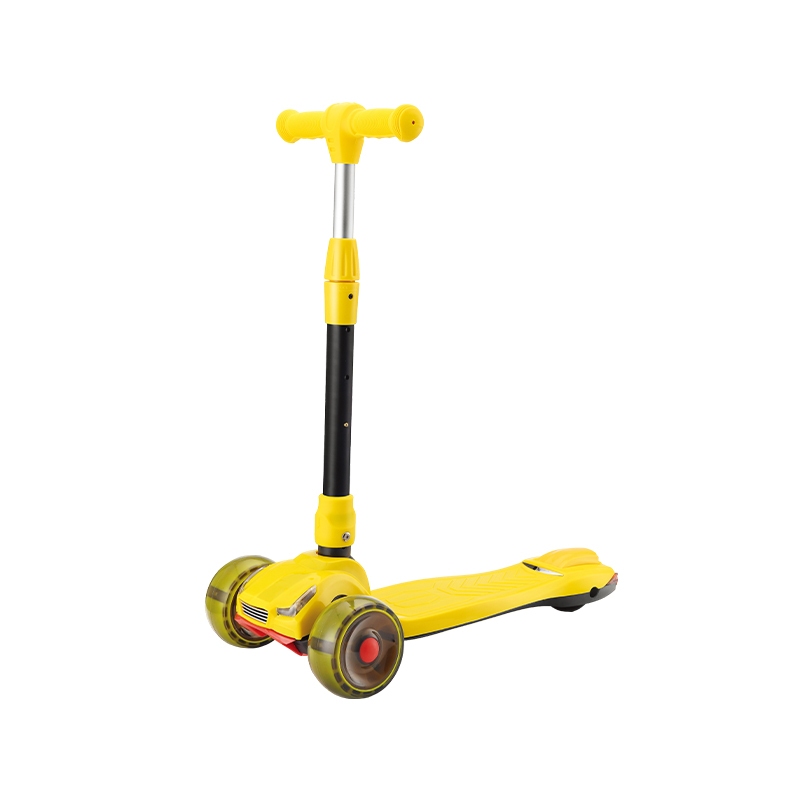
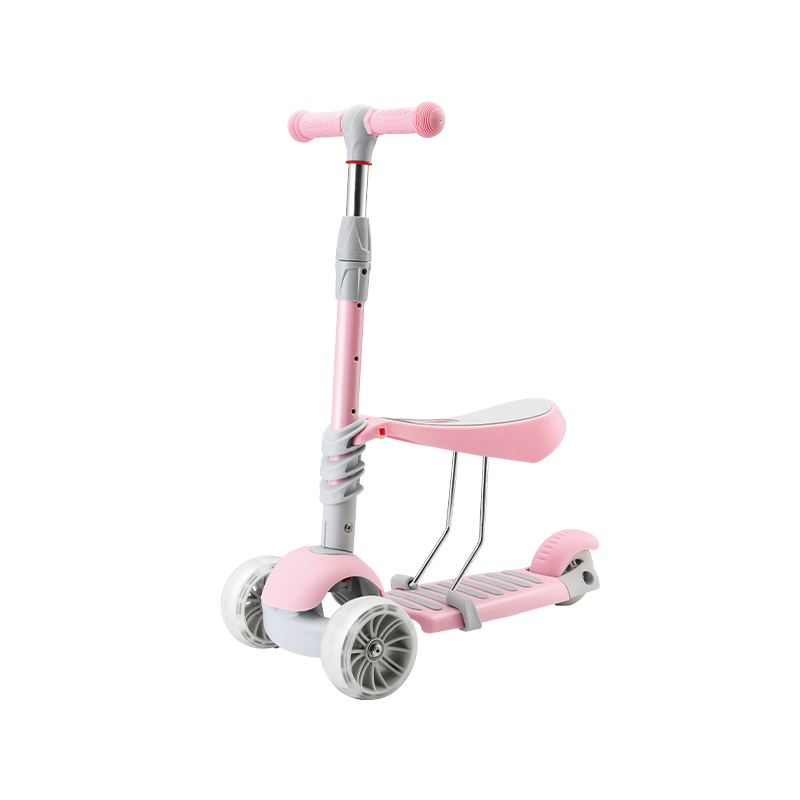
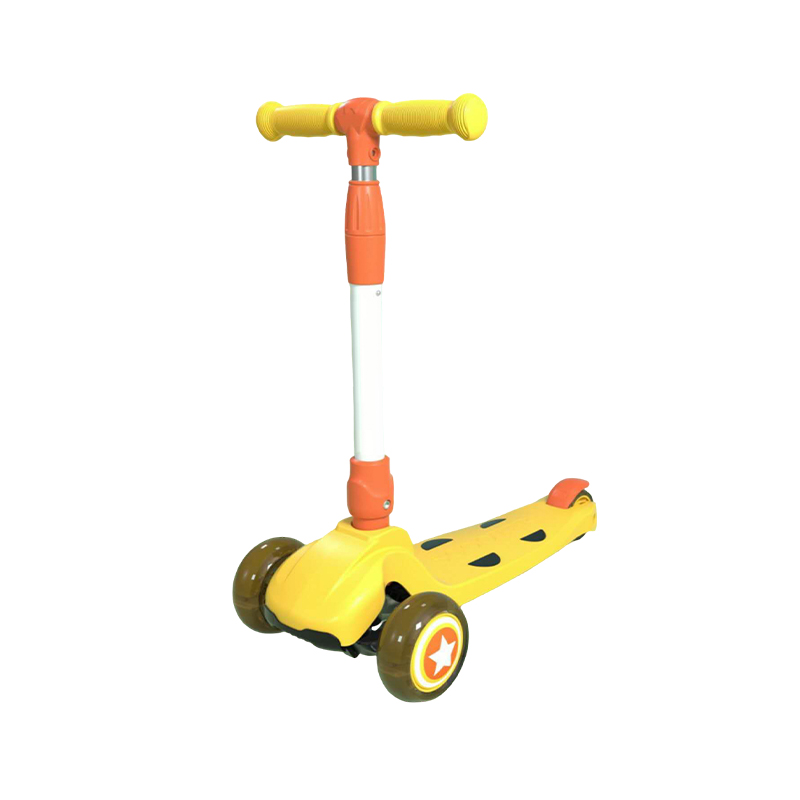
The charm of scooters lies first and foremost in their low barrier to entry and high inclusivity. Unlike bicycles or balance bikes that require complex skills, most children's scooters use a three-wheeled stable structure—two front wheels provide lateral support, and a single rear wheel handles steering and propulsion. Children simply need to alternate pushing off the ground with their feet to move forward easily; when turning, a slight tilt of the body makes the scooter obediently follow the direction. This intuitive control logic allows children aged 3 and up to quickly master the skill and gain a sense of accomplishment in "moving on their own." The height-adjustable handlebars allow for continued use as the child grows, becoming a long-lasting childhood companion.
More importantly, scooters inherently stimulate active movement. Every push-off exercises lower limb strength, every turn trains coordination and balance, and every speed control enhances spatial awareness and reaction time. These seemingly simple movements subtly promote nervous system development, laying the foundation for more complex motor skills in the future. Unlike passive entertainment, scooters require children's full engagement—eyes observing road conditions, hand-foot coordination, and brain making real-time judgments—this active focus is far more effective in releasing energy, relieving anxiety, and bringing genuine physical and mental pleasure than static games.
In outdoor settings, scooters demonstrate strong adaptability and social attributes. Whether it's a neighborhood square, park trails, or a flat, shady path, it handles it with ease. The lightweight frame makes it easy for children to push independently, and the one-button folding design allows parents to easily store it in the trunk or stroller basket, enabling spontaneous outdoor plans. When several children scooter together, chasing, racing, or role-playing games naturally emerge, fostering language communication, a sense of rules, and teamwork amidst laughter. Scooters become a medium for socialization, transforming solitary play into collective joy.
Safety is also key to earning parents' trust. High-quality children's scooters use highly elastic PU silent wheels, ensuring smooth rolling, shock absorption, and noise reduction, while effectively protecting wooden floors and tiles. Wide, non-slip footboards ensure a stable foothold for little feet; the rear wheel foot brake allows children to smoothly slow down by gently pressing with the instep. The frame is made of environmentally friendly, non-toxic materials, with rounded edges and no sharp protrusions, minimizing the risk of injury even in the event of a fall. This dual guarantee of "fun to play, safe to use" makes parents more willing to let their children try and take risks.
Especially valuable is the new possibility for parent-child interaction that scooters offer. On weekend mornings, parents push strollers while children ride scooters side-by-side; in the evening, the family glides and chats together in the sunset. Scooters bring families closer, creating shared topics and memories. Quiet, energy-efficient, and emission-free, they lead family time outdoors and into the real world in the simplest way.
Ultimately, the reason children's scooters are the best companions for outdoor activities is not because of their advanced technology, but because they perfectly match children's innate curiosity, freedom, and desire to explore. Their simple structure gives children autonomy in movement; their smooth gliding connects sunshine, grass, and laughter. When a little figure rides off into the wind on a scooter, it's not just a snapshot of childhood, but also the starting point of a healthy lifestyle—with each turn of the wheels, children learn courage, balance, and how to enjoy this vast and beautiful world.
The charm of scooters lies first and foremost in their low barrier to entry and high inclusivity. Unlike bicycles or balance bikes that require complex skills, most children's scooters use a three-wheeled stable structure—two front wheels provide lateral support, and a single rear wheel handles steering and propulsion. Children simply need to alternate pushing off the ground with their feet to move forward easily; when turning, a slight tilt of the body makes the scooter obediently follow the direction. This intuitive control logic allows children aged 3 and up to quickly master the skill and gain a sense of accomplishment in "moving on their own." The height-adjustable handlebars allow for continued use as the child grows, becoming a long-lasting childhood companion.
More importantly, scooters inherently stimulate active movement. Every push-off exercises lower limb strength, every turn trains coordination and balance, and every speed control enhances spatial awareness and reaction time. These seemingly simple movements subtly promote nervous system development, laying the foundation for more complex motor skills in the future. Unlike passive entertainment, scooters require children's full engagement—eyes observing road conditions, hand-foot coordination, and brain making real-time judgments—this active focus is far more effective in releasing energy, relieving anxiety, and bringing genuine physical and mental pleasure than static games.
In outdoor settings, scooters demonstrate strong adaptability and social attributes. Whether it's a neighborhood square, park trails, or a flat, shady path, it handles it with ease. The lightweight frame makes it easy for children to push independently, and the one-button folding design allows parents to easily store it in the trunk or stroller basket, enabling spontaneous outdoor plans. When several children scooter together, chasing, racing, or role-playing games naturally emerge, fostering language communication, a sense of rules, and teamwork amidst laughter. Scooters become a medium for socialization, transforming solitary play into collective joy.
Safety is also key to earning parents' trust. High-quality children's scooters use highly elastic PU silent wheels, ensuring smooth rolling, shock absorption, and noise reduction, while effectively protecting wooden floors and tiles. Wide, non-slip footboards ensure a stable foothold for little feet; the rear wheel foot brake allows children to smoothly slow down by gently pressing with the instep. The frame is made of environmentally friendly, non-toxic materials, with rounded edges and no sharp protrusions, minimizing the risk of injury even in the event of a fall. This dual guarantee of "fun to play, safe to use" makes parents more willing to let their children try and take risks.
Especially valuable is the new possibility for parent-child interaction that scooters offer. On weekend mornings, parents push strollers while children ride scooters side-by-side; in the evening, the family glides and chats together in the sunset. Scooters bring families closer, creating shared topics and memories. Quiet, energy-efficient, and emission-free, they lead family time outdoors and into the real world in the simplest way.
Ultimately, the reason children's scooters are the best companions for outdoor activities is not because of their advanced technology, but because they perfectly match children's innate curiosity, freedom, and desire to explore. Their simple structure gives children autonomy in movement; their smooth gliding connects sunshine, grass, and laughter. When a little figure rides off into the wind on a scooter, it's not just a snapshot of childhood, but also the starting point of a healthy lifestyle—with each turn of the wheels, children learn courage, balance, and how to enjoy this vast and beautiful world.